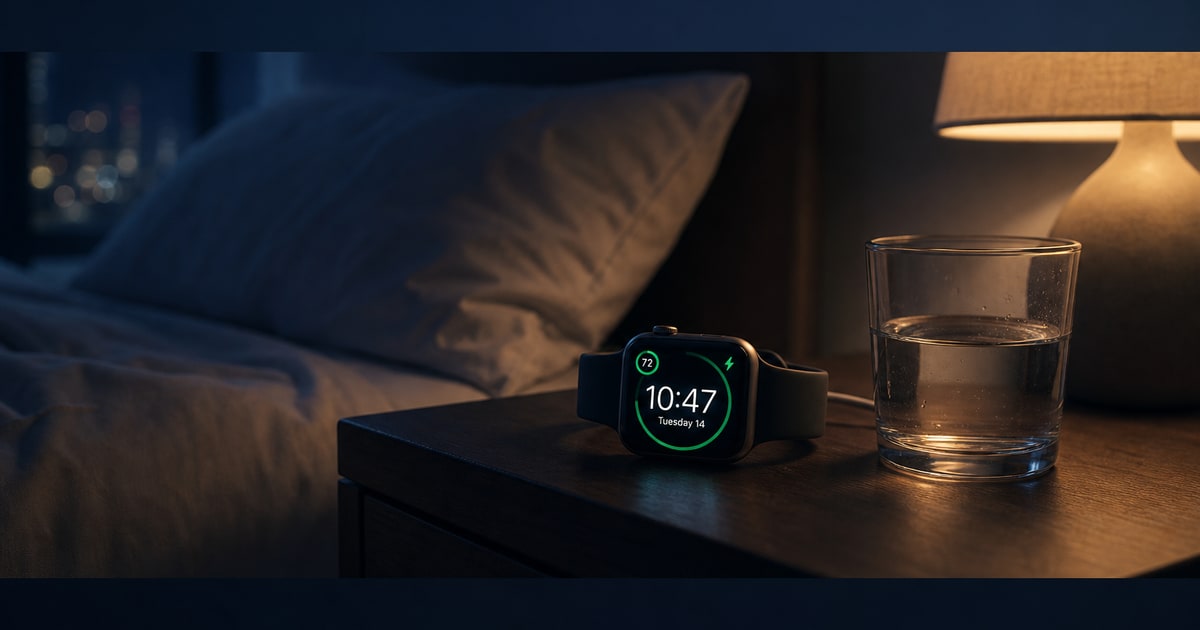
Most people don’t think of sleep as a habit. It’s the thing that happens (or doesn’t) after everything else is done. But the behaviors that shape your sleep quality — consistent bedtimes, wind-down routines, putting the phone down before midnight — are as habitual as anything else you’d track. The problem is that sleep has always been annoying to log. You’re asleep. You can’t tap anything.
Apple updated its sleep stages algorithm in October 2025, and the coverage that followed in early 2026 surfaced a lot of questions people actually have: Is the data reliable now? What’s being tracked? How accurate are the REM and deep sleep readings compared to earlier Watch models? The short answer is that the updated algorithm uses accelerometer and heart rate data more aggressively, and independent reviewers found it meaningfully more consistent with clinical polysomnography than previous versions, particularly on Series 9 and later hardware. It still isn’t a medical device. But for behavioral purposes — understanding your patterns, noticing when your sleep degrades, connecting the dots between habits and rest — it’s more than good enough.
What Apple Watch Actually Captures
When you wear your Watch to bed with Sleep Focus enabled, it logs time asleep, time awake, and (on Series 9 and Ultra 2 and later) sleep stages: REM, core sleep, and deep sleep. All of that flows into Apple Health automatically. You don’t do anything. The Watch samples your movement and heart rate throughout the night and writes the result to HealthKit while you’re making coffee in the morning. What you get is a consistent, low-effort record of one of the most impactful variables in your health — without a single manual entry.
The habit angle here isn’t really about the data itself. It’s about building the identity of someone who prioritizes sleep. That means treating “got enough sleep” as a real daily habit, one worth marking, celebrating, and noticing when it slips. The friction point has always been that sleep tracking requires either a dedicated device or remembering to log it after the fact. Neither is realistic long-term.
Less Friction, More Follow-Through
This is exactly where connecting your sleep data to a habit tracker pays off. Meridius pulls directly from Apple Health, which means a sleep habit in Meridius can complete itself the moment your Watch writes the data. If you slept seven hours, the habit logs. You never open the app to check it off. The daily mark is just there, accurate, and waiting for you when you do open the app.
That kind of passive logging matters more than it sounds. Manual check-ins create a daily decision point, and decision points are where habits break down. When you’re tired, rushed, or just not in the mood to engage with a tracker, you skip it. The skip becomes a missing day. The missing day becomes a reason to feel bad about something that was actually going well. Removing that loop entirely, for a habit like sleep where you genuinely can’t log it in the moment, means the record stays intact without you having to protect it. Your streak reflects reality, not your memory.